Intrauterine Insemination (also known as artificial insemination) is the process of preparing and delivering sperm so that a highly concentrated amount of active motile sperm is placed directly through the cervix into the uterus.
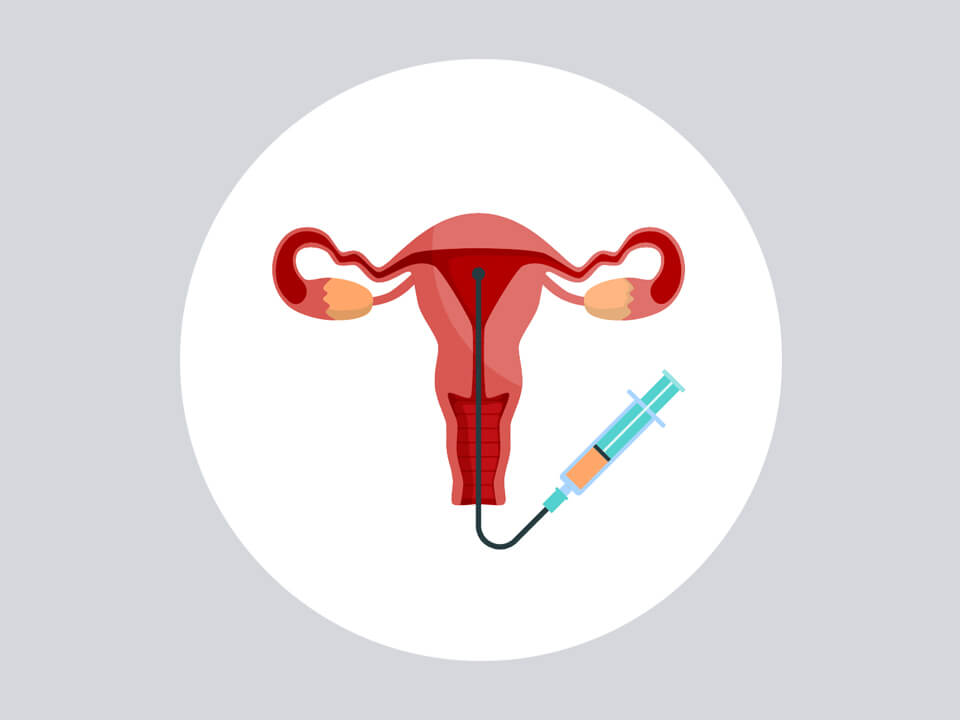
IUI is often used as the first step in fertility treatment for couples with unexplained infertility, mild male factor infertility, and patients using donor sperm.
IUI is typically performed with fertility drugs for the female patient. Thus, for infertility patients, IUI is commonly performed as a low-tech, cost-effective approach to enhancing fertility in patients. Prior to initiating IUI treatment, women must have at least one documented open fallopian tube as demonstrated by a hysterosalpingogram (tubal dye study).
The goal of IUI is to get a high concentration of motile sperm as close to the opening of the fallopian tubes as possible, at approximately the same time as the egg is being released.
Intrauterine Insemination FAQs
Accordion
An IUI procedure is performed by placing a speculum in the vagina and then inserting a thin, flexible catheter through the cervix and into the uterus. Washed sperm is then slowly injected through the catheter. The procedure takes approximately 3-5 minutes. Most patients have only mild discomfort with IUI, typically from placement of the speculum.
IUI is often used as the first step in fertility treatment for couples with unexplained infertility, mild male factor infertility, and patients using donor sperm. Depending on the circumstances, IUI is used either in a natural menstrual cycle or in combination with fertility medications at various doses to promote the growth of multiple eggs (called superovulation).
The chances of success per IUI cycle depend on the age of the patient undergoing IUI, and on the reason for IUI treatment. For patients undergoing IUI for treatment of unexplained infertility, success rates per attempt range from 10-12% for patients under 35 years old to 5-8% in patients 35-40 years old. In patients who are using donor sperm or those with infertility due to low sperm counts, the success rate is higher, averaging 15-20% per attempt.
IUI is a very low risk procedure. The primary risk of IUI is associated with medications that can be used to increase the number of eggs being produced at once, which can lead to an increased risk for multiple gestation (twins, triplets or more). This risk is highest in
younger patients and can occur in ~5% of pregnancies.
Whether or not you need to use medication with your IUI depends on why you are undergoing this procedure. For couples with male factor infertility, women pursuing single parenthood, or same-sex female couples, an IUI is typically done in a natural menstrual cycle without additional medication. For individuals or couples with unexplained infertility, IUI is most effective when used in combination with oral medications like clomiphene citrate (Clomid) or letrozole (Femara) in a process known as superovulation.