There are two different types of genetic tests that can be performed on embryos before they are implanted – preimplantation genetic testing for aneuploidy (PGT-A, previously known as PGS) and preimplantation testing for a monogenic disorder (PGT-M, previously known as PGD).
PGT-A is a screening test that evaluates the embryo’s chromosomes, the structures that hold all of our genetic material.
The correct number of chromosomes in an embryo is 46 – where half should come from the egg and the other half from the sperm. PGT-A screens for the presence of any missing or extra chromosome material, within the limits of test resolution. Chromosome abnormalities in an embryo may lead to failure of the embryo to implant, a miscarriage, or impact health of a future child. PGT-A does not change or correct the embryo’s chromosomes. However, if an embryo is screen normal through PGT-A, the risks previously described are lower than for an embryo that has not been screened.
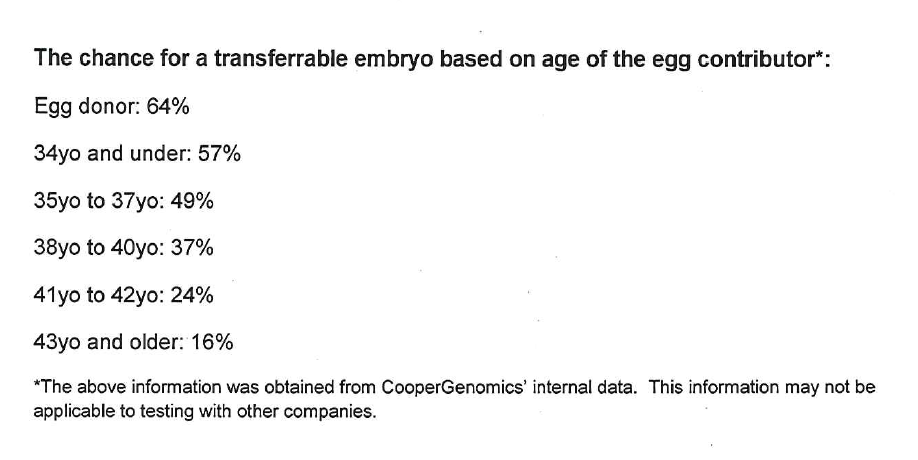
The primary factor that determines risk of abnormal chromosomes in an embryo or pregnancy is age of the egg contributor. The chart below shows estimated average chances for an embryo to have a normal PGT-A result, based on maternal age. Chromosome results vary between embryos and cycles, so these figures are not exact estimates for a cycle outcome. PGT-A can be performed in conjunction with a standard IVF cycle for any person or couple, but is typically considered in cases where the female partner is over 35 years of age. An additional benefit of PGT-A is that it improves our ability to choose the healthier embryos in a cohort, achieving an improved success rate with a single embryo transfer—when a normal embryo is identified through PGT-A—and reducing the risks of twin pregnancy. As PGT-A is a screening test, there is a possibility of misdiagnosis of the embryo’s chromosomes.
Preimplantation genetic diagnosis or preimplantation genetic testing for monogenic (single gene) disorders (PGT-M) is a testing option that is available when there is a known genetic condition in a person or family. This test, when used in conjunction with IVF, can help to reduce the risk of passing on an inherited condition. It may be appropriate when both reproductive partners are identified to carry the same genetic condition (such as cystic fibrosis or sickle cell anemia), when there is a personal history of a genetic condition in one partner or a close relative, when a female patient is a carrier for a X-linked condition or when patient or partner carry a balanced chromosome rearrangement (PGT-SR). Families may also use PGD when a member of the family is in need of a bone marrow donor, as a way to have a child who can provide matching stem cells.

PGT-M is available for many inherited conditions for which the exact mutation is known. Because each case is unique, PGT-M involves case referral to a genetic laboratory, which must then usually build a custom test. This process typically takes about 3 months in total, before an IVF cycle can begin.
PGT-M can significantly reduce the chances of having a child with the condition. It is typically done for couples that do not have difficult conceiving. Many couples know they are at risk due to a family member with the disease, but some people or couples may be silent carriers. Preconception carrier screening can help to identify some people and couples at increased risk of having a child with a genetic condition, and PGT-M may become an option for them during the course of their care with us.
There are multiple types of preimplantation genetic testing (PGT). Your physician can help you determine what type of testing may be appropriate or recommended for you.
Preimplantation Genetic Testing FAQs
Accordion
The risks, benefits, and limitations of PGT are reviewed in detail during a genetic counseling consult. It is important to understand these prior to completion of PGT in an IVF cycle. There are risks associated with the biopsy for PGT, as well as the freeze/thaw process. It is possible that there may be no embryos recommended for transfer based on the PGT results. PGT does not identify all genetic risks and does not replace screening and testing options that may be recommended during a pregnancy.
After the CRH embryologist performs a biopsy to remove several cells for PGT, your embryo(s) will be frozen and retained in storage. The embryo biopsy sample(s) will be delivered via by a courier to the PGT laboratory for testing. Prior to cycle start, you will complete PGT consent and directive forms with a CRH staff member. In the directive form, you will elect whether you would prefer affected/abnormal embryos are donated to research or discarded from storage. If you complete both PGS and PGT-M, you will have the option to store all embryos with a normal PGS result regardless of the PGT-M result. Please speak with your genetic counselor or physician if you have questions or concerns prior to signing these documents.
The exact cost for PGT varies based on the type of testing completed and number of embryo samples tested, in addition to other factors such as potential insurance coverage and the laboratory at which testing will be completed. Your CRH genetic counselor can provide you with self-pay cost estimates or connect you with the billing department at the PGT laboratory, as appropriate.
Please note that the cost for PGT itself is separate to any associated fees from UCSF, which may include the charges for procedures such as embryo biopsy and freeze. Please follow up with your financial navigator if you have any questions or concerns about expected costs prior to cycle start.
Send any prior genetic testing reports to your pre-cycle coordinator before the consult.
Gather relatives’ health history information. The genetic counselor will ask about three generations of your family (children, siblings, parents, aunts, uncles, first cousins, and grandparents), including:
- Approximate ages of relatives or approximate age and cause of death.
- Known health conditions, including approximate age at diagnosis and specific type if known (e.g., type of cancer and age at diagnosis)
- If applicable, check whether your partner is available to attend the appointment.
- When possible, it is helpful for all parties to be present for collection and review of family history and discussion of genetic testing options and results.
- If you think you may proceed with PGT in a cycle, both you and your partner must sign consent forms.
PGT requires IVF, where multiple eggs are grown and then retrieved directly from the ovaries. These eggs are fertilized with sperm in our embryology lab, and the resulting embryos are grown in the lab for approximately one week. At this point, the embryo is biopsied with the removal of approximately 5-10 cells. The embryo itself is then frozen, and the isolated cells are sent for genetic analysis.
At UCSF, our embryology laboratory staff has extensive experience with embryo micromanipulation and biopsy. Our genetic counselors are on staff to coordinate your cycle with the IVF team and the embryology laboratory, to make the process as smooth as possible.
Yes, PGT is used for patients with autosomal dominant polycystic kidney disease in cases where a known variant can be identified. Please contact us for an evaluation to discuss specific considerations for this condition.