There are several types of genetic testing done in fertility care, including carrier screening, PGT-M, and PGT-A.
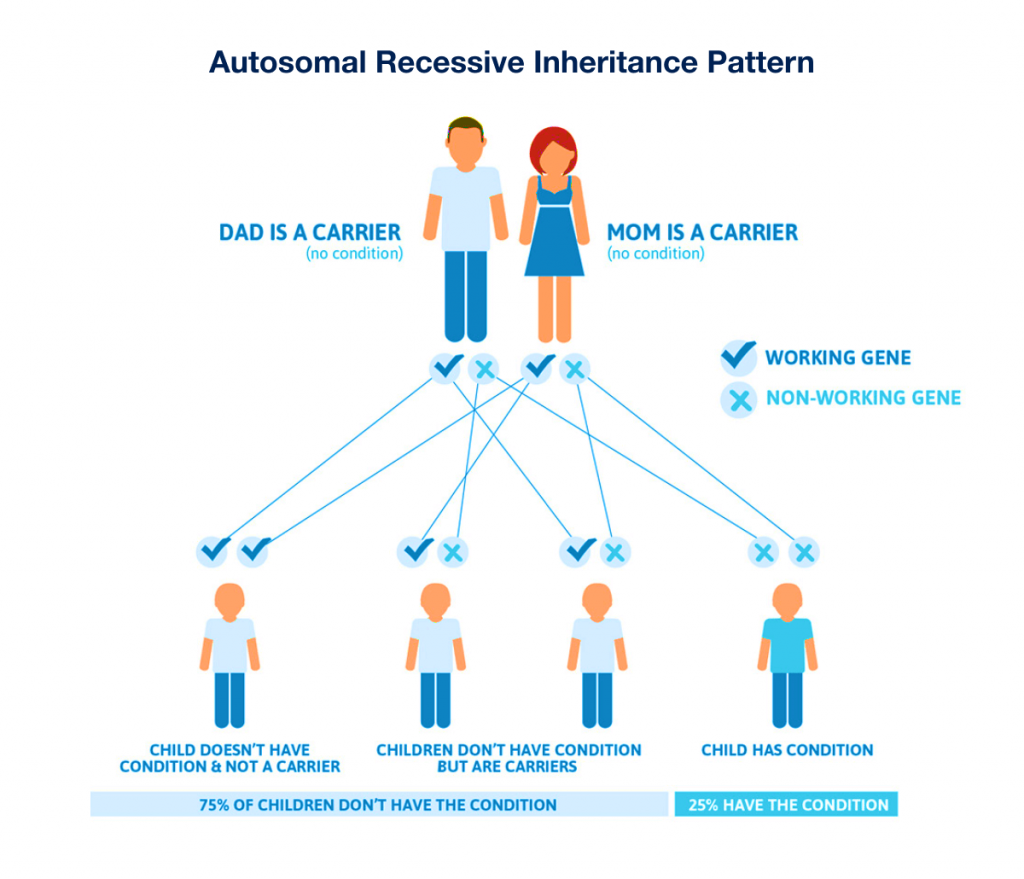
Carrier screening is a type of genetic test that can determine if a person or couple carry genetic variation that could lead to increased risk for a genetic condition in a child.
Most genetic conditions included in screening are inherited in an “autosomal recessive” manner. This means that there is a 1 in 4, or 25%, chance for a child to have a genetic condition when both parents are carriers of it. Carrier screening also includes selected X-linked conditions. These conditions are most often passed from a carrier mother to a son who has the condition, but both sexes may show signs and symptoms of the condition. Carrier screening involves a blood draw or collection of a saliva sample.
Genetic counselors are healthcare professionals with unique specialized graduate degrees and experience in the areas of both medical genetics and counseling.
Genetic counselors work as members of a healthcare team, providing risk assessment, education and support to individuals and families as they navigate genetic testing options or their risk for inherited conditions. Genetic counselors also interpret genetic test results, provide supportive counseling, and serve as patient advocates.
Genetic Carrier Screening FAQ
Accordion
- POSITIVE: A positive result means that the screening detected a genetic variation in your DNA that is associated with being a carrier for one or more of the conditions included on the screening panel. As most of the screened conditions are “recessive”, knowing the carrier status of your reproductive partner is important to estimate the chance of having a child with the condition.
- NEGATIVE: A negative result means that the screening did not detect a genetic variation that is associated with being a carrier for one of the conditions on the list. This reduces, but does not eliminate, the chance that you are a carrier of one of the conditions included on the screening panel.
If you and/or your reproductive partner have carrier screening results that show increased risk, your pre-cycle coordinator will provide you information on how to schedule an on-demand phone consult with a Myriad genetic counselor. Based on this consult, it may be recommended for you to follow up with your physician and a genetic counselor at CRH to discuss what options may be available to you, including preimplantation genetic testing of embryos for the condition in question. Apart from preconception testing, other options could include prenatal testing—with an invasive procedure (chorionic villus sampling or amniocentesis)—or testing after birth.
When carrier screening is performed prior to pregnancy, it can allow for different options if there is an increased risk based on the results. Results from carrier screening may change the fertility treatment plan. For example, IVF with preimplantation genetic testing of embryos for the condition is possible in many cases.
Recessive conditions do not present in a family until two people who carry the same condition meet and have a child together. This means that most children with inherited conditions are born to parents with no known family history.
If you would like general information about the carrier screening panel offered at CRH, please navigate to the following website: https://www.natera.com/womens-health/horizon-advanced-carrier-screening/
Please contact your insurance and request confirmation of coverage of Gene Test (Horizon 445) which is associated with CPT 81443. The diagnosis code is either:
- Z31.430 –Female; Genetic disease carrier status for procreative management or;
- Z31.440 – Male; genetic disease carrier status for procreative management
Note that UCSF CRH does not perform prior authorization for carrier screening testing.
If you are choosing the self-pay option for your Natera genetic test, the total cost will be $249. This fee covers the full cost of the test and the analysis of your genetic information.
Opting for self-pay allows you to bypass insurance, which can be a time-consuming and complicated process. This gives you direct access to testing without waiting for insurance approval or dealing with coverage restrictions.
Call Natera at 844-384-2996 to request they switch your testing to a self-pay account.
If you would like to complete carrier screening, please contact your pre-cycle coordinator. You may either schedule a blood draw at CRH or receive a saliva sample collection kit shipped to your home address.
Sperm banks use different carrier screening panels from different testing labs. It is important that you review any genetic carrier screening results for your donor in his profile. If your chosen donor is identified to be a carrier of a genetic condition, please notify your pre-cycle coordinator. The CRH genetic counselors can help review the results and coordinate for you to complete the same carrier screening panel as your chosen donor, if needed, to clarify any reproductive risk based on carrier status.
Genetic Counselor FAQs
Accordion
You may speak with one of our genetic counselors for one of the following indications:
- To review the option of preimplantation genetic testing in an IVF cycle
- To discuss questions about genetic risk based on personal and family medical history
- To review donor family history and genetic screening results, if you would like to match with a donor
You may speak with a genetic counselor once or over time based on indication and treatment plan.
At CRH, the most typical indication for a genetic counseling consult is to review the option of preimplantation genetic testing (PGT). You may discuss with your physician about whether PGT would be appropriate or of potential benefit to you in an IVF cycle. Some reasons a person or couple may consider the addition of PGT to their treatment plan are listed below:
- Maternal age
- Recurrent pregnancy loss
- Balanced chromosome translocation
- Genetic condition in a parent or close relative
- Carrier status of the same genetic condition in both parents
- Family balancing/sex selection
During the consult, the genetic counselor will complete a thorough review of the PGT option(s) that are applicable for you. The genetic counselor will collect your family health history and discuss a risk assessment based on the information you share.
If you would like more information about whether a genetic counseling consult may be appropriate or of benefit to you, please discuss this with your physician. If you have a specific question for our genetic counselors, you may contact them by writing to the “Genetics” team in the CRH patient portal.