
At CRH, we focus on quickly providing you with the information you need to make educated decisions about your fertility preservation options prior to cancer treatment.
Building a Family after Cancer
Learning you have cancer can be difficult at any time. If you’re of childbearing age, you may have additional questions, such as:
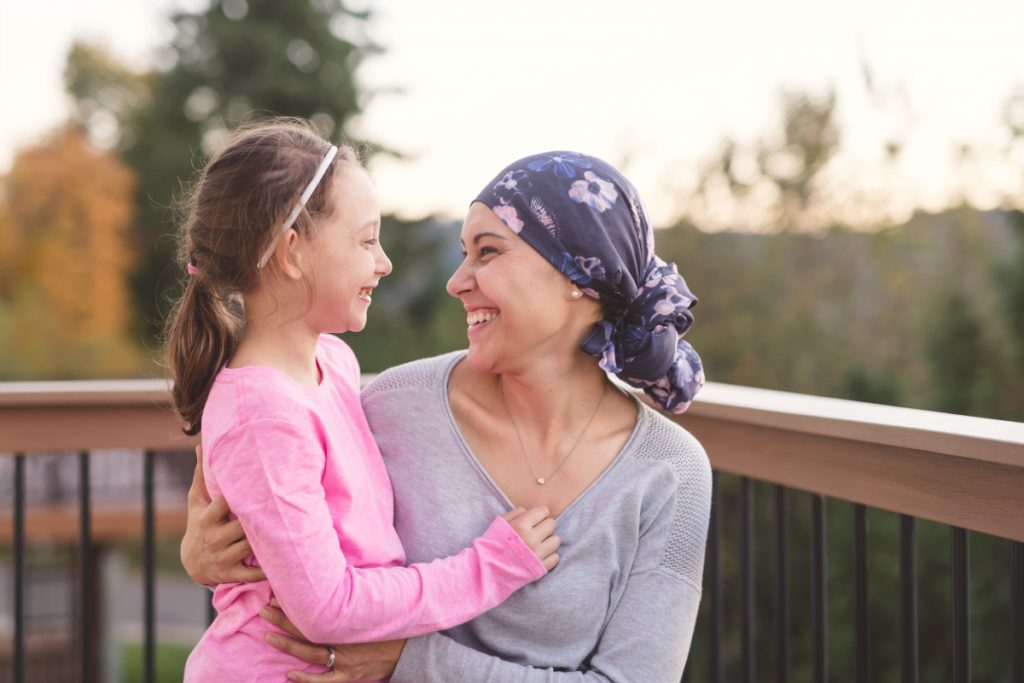
- Will I be able to have a family once my cancer treatment is over?
- Can I have a healthy baby after cancer treatment?
The UCSF Fertility Preservation Program provides information to support you in making decisions related to your ability to conceive after cancer treatment. The program includes the following features:
- Rapid access to information, which is crucial for decision making because fewer choices are available once treatment begins
- Support in choosing the right fertility preservation option for your needs and situation
- Seamless coordination with your cancer treatment team
- Post-cancer evaluation of your reproductive health
Your Team
We work closely with your cancer treatment team to quickly assess your situation and create a personalized plan that reflects your unique needs and preferences. Our team recognizes that this may be a time of anxiety or stress for you, so our focus is on streamlining this process and moving as rapidly as possible to treatment.
The Fertility Preservation Program is part of the UCSF Center for Reproductive Health.
- A dedicated medical team at the forefront of fertility preservation research and treatment
- One of the most highly respected certified embryology laboratories in the nation
- Board-certified reproductive endocrinologists with extensive experience in fertility preservation for cancer patients
- Strong partnership with your cancer care team no matter where they are located
- Existing relationships with oncologists in the Bay Area and throughout the country
Services Offered
We follow you throughout your cancer journey, assessing your ovarian function and potential to build the family you desire. We also treat patients who have a genetically determined high risk of cancer, such as BRCA mutation, and those with a history of childhood cancer.

Some of the many specialized services we currently offer:
- Assisted reproductive technology (ART)
- Complementary and alternative medicine coordination
- Donor embryo and egg programs
- Fertility preservation surgery
- Genetic counseling to discuss potential inheritance of harmful variants, and options to prevent transmission to children
- In vitro maturation (IVM) of oocytes
- Oocyte and ovarian tissue cryopreservation
- Preimplantation genetic diagnosis (PGD)
- Psychological counseling to support decision making
- Sperm cryopreservation and advanced sperm retrieval (through the Department of Urology)
- Surrogacy services
- Urology services
Innovation Through Research
Our current research is focused on assessing risk factors, predicting the impact of various treatments and improving other interventions. Examples include:
- Multidisciplinary surveys to assess patients’ attitudes and awareness of risk, and how the loss of fertility would factor into their life choices
- Evaluating markers to predict the effect of cancer treatments on ovarian aging and fertility
- Developing improved interventional strategies, such as new models for ovarian stimulation; in vitro oocyte maturation; cryopreservation of eggs, sperm and ovarian tissue; and the potential generation of human primordial germ cells through stem cell technology